AIMBE
AIMBE
Rory Cooper, Ph.D.
AIMBE College of Fellows Class of 1998 For outstanding contributions to improving quality and increasing innovation in wheelchair design, and for leadership in rehabilitation engineering.
Rory Cooper was elected to the National Academy of Engineering
Via University of Pittsburgh | February 8, 2024Rory Cooper, a distinguished professor in Pitt’s School of Health and Rehabilitation Sciences and founding director of the Human Engineering Research Laboratories, was among 114 new U.S. members elected to the National Academy of Engineering Class of 2024.
Election to the National Academy of Engineering is among the highest professional distinctions accorded to an engineer. Academy membership honors those who have made outstanding contributions to engineering research, practice or education and recognizes “the pioneering of new and developing fields of technology, making major advancements in traditional fields of engineering and developing or implementing innovative approaches to engineering education… Continue reading.
President Biden gave the National Medal of Technology and Innovation to Pitt’s Rory Cooper
Via University of Pittsburgh | October 24, 2023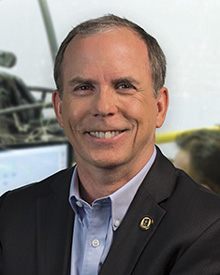
Today at the White House, U.S. President Joe Biden awarded Rory Cooper with the nation’s highest honor for technological achievement, the National Medal of Technology and Innovation, in honor of Cooper’s careerlong crusade to improve assistive technology for those with disabilities.
Cooper, a distinguished professor in Pitt’s School of Health and Rehabilitation Sciences, joins a list of laureates that began with Steve Jobs and Steve Wozniak in 1985 and includes the country’s foremost inventors in computer technology, biotechnology and more… Continue reading.
This Year on Memorial Day, We Honor the Heroes
Via HERL | May 27, 2020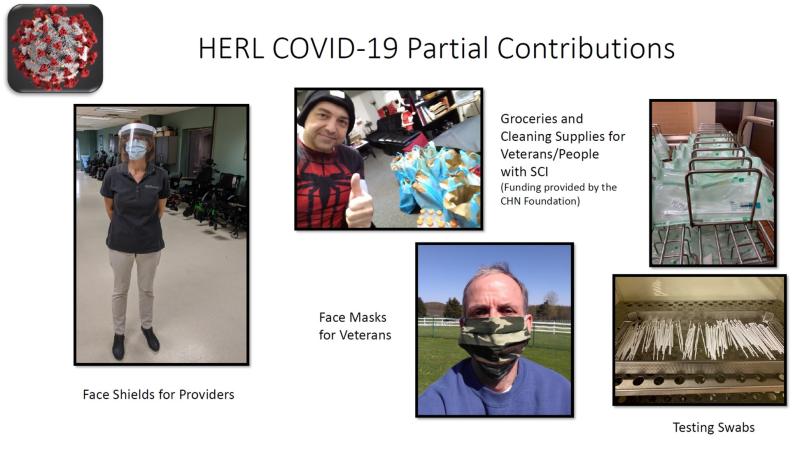
Memorial Day serves as a time to reflect on the sacrifices made by members of the Armed Forces, their families, friends, and all their loved ones. This year on Memorial Day, we honor the heroes, including people on the front lines of COVID-19, who gave their lives to defend our freedoms and way of life. No social distance or coronavirus restrictions will hinder our solemn remembrance of these patriots. This year millions of Americans have arisen to the challenge to fight the COVID-19 pandemic. I am proud that the Team at the Human Engineering Research Laboratories, many of whom are Veterans, have volunteered to support people in need, vulnerable populations, healthcare providers, and Veterans. HERL has been making and providing Face Shields, Face Masks, Food and Hygiene Supplies, and Test Swabs.
Engineering a better life
Via USPTO | October 8, 2019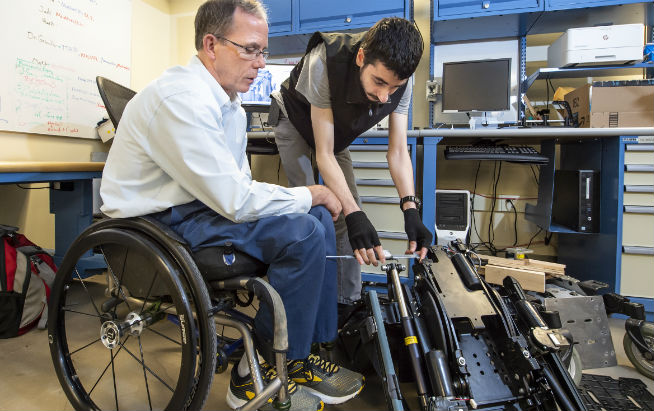 Each month, our Journeys of Innovation series tells the stories of inventors or entrepreneurs whose groundbreaking innovations have made a positive difference in the world. Hear it in their own words or read the transcript below.
Rory Cooper has always enjoyed tinkering and competition. As a kid growing up in Southern California, he ran track and cross country, and he often worked in his parents’ garage, making improvements to skateboards and bicycles. He brought these skills to his work in the U.S. Army, but then an accident changed his life forever and set him on a path to become an inventor, engineer, and bronze medalist.
Rory Cooper: When I was first injured, I was told by the doctors that, you know, “you’d probably have a 10-year lifespan…” And I could’ve just said, well then I’ll just hang out and do nothing and wait for my time to come instead of trying to do as much with my life as I could…
Linda Hosler: And so began a journey for Rory Cooper that made him one of the world’s leading experts in human mobility and accessibility engineering, as well as an advocate for veterans and the disabled… Continue reading.
Sitting Tall
Via Inventors Digest | September 1, 2019Rory Cooper struggled to contain hi pinballing emotions from the podium in Seoul, South Korea, while the world watched. The man always in motion had arrived in an almost unthinkable way.
Cooper had won the bronze medal in the 4-by-400-meter wheelchair relay at the 1988 Paralympic Games, his participation the culmination of an impossible dream – “thousands of hours of preparation and uncountable sacrifices by me, my families, and friends. It took tremendous discipline, effort and focus to get to the Paralympics. Winning a medal is a wonderful reward… Continue reading.
Pitt professor’s inventions recognized by Smithsonian, patent office
Via Trib Live | May 21, 2019Babe Ruth. Honus Wagner. Thomas Edison?
When it comes to collectible trading cards, inventors are not usually the first thing that comes to mind.
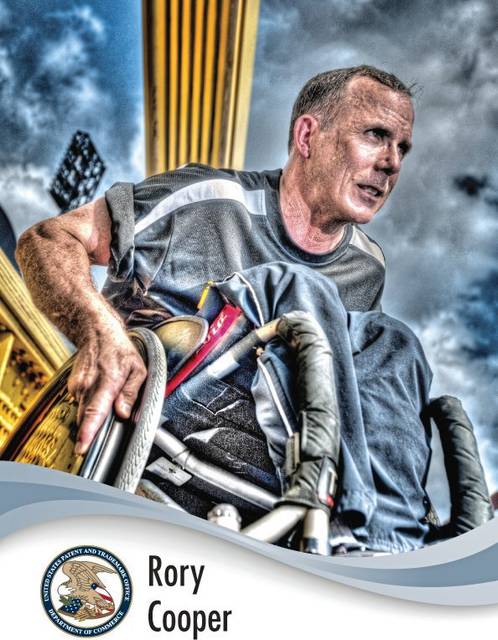
But Rory Cooper, director of the Human Engineering Research Laboratories (HERL) at the University of Pittsburgh, was recognized Saturday by the Smithsonian Institute’s Museum of American History and the U.S. Patent and Trademark Office with his own trading card… Continue reading.
Rory Cooper is Driven to Solve Problems for Disabled People
Via AAAS | August 20, 2018As a young man, facing life after suffering a spinal cord injury in a bicycling accident in 1980, AAAS Fellow and AAAS-Lemelson Invention Ambassador Rory Cooper wanted three things — to become an engineer, to be able to support a family, and to make a difference in the world. But he didn’t think he could obtain any of them in the type of wheelchair that was available at the time.
In pursuit of those goals, Cooper has played an outsized role in helping disabled people achieve autonomy.
At the time of his accident, Cooper was stationed in Germany with the United States Army. He came back home to San Luis Obispo, California, and was planning to enter California Polytechnic State University to study electrical engineering. However, he didn’t think the typical wheelchair could meet the physical requirements of a student. “I was probably going to be pushing three to four miles a day. That wasn’t feasible in an 80-pound behemoth,” which was the standard at the time, Cooper said. So Cooper designed an ultralight wheelchair that could travel the distance he had to cover without destroying either the chair or himself… Continue reading.
Part of the Crowd
Via Pitt Med | March 20, 2018Brandon Daveler twisted the throttle on his Yamaha and hit a jump at full speed. It was the first American Motorcyclist Association race of the 2005 season, and Daveler, a 15-year-old thrill seeker who enjoyed working on engines, was confident he could win the District 5 title. But his life changed in midair.
Daveler flipped over the handlebars and landed on his head. Lying on the dirt track at the Greene County Fairgrounds in southwestern Pennsylvania, he heard the announcer yell, “Red flag! Red flag!” indicating that the race had stopped. The paramedics rushed to Daveler. He felt as though he were still sitting on the bike—like his arms were still holding the handlebars. But they were at his side on the dirt. After a life flight to a Morgantown, W.Va., hospital, he learned he’d suffered a fracture to his fourth and fifth cervical vertebrae and had quadriplegia. After months of rehabilitation, he regained movement in his arms but not in his wrists or hands.
An only child, Daveler relished his independence. He preferred racing to basketball because there weren’t teammates. The accident’s aftermath was shocking: The boy who repaired his bike alone at his home in Uniontown, Pa., had to ask people to scratch his head. When he returned to the ninth grade the following autumn, Laurel Highlands High School bought him a laptop and hired an aide to assist him. But the friends who came to his house to ride his dirt bike slowly stopped coming… Continue reading.
Dr. Rory Cooper named 2017 AAAS Fellow
Via U.S. Department of Veterans Affairs | February 18, 2018 VA researcher Dr. Rory A. Cooper has been named a 2017 Fellow of the American Association for the Advancement of Science in the discipline of engineering. Cooper was singled out for his “distinguished contributions to the field of bioengineering and health and rehabilitation sciences, particularly for applications for people with disabilities,” according to the AAAS.
Cooper, himself a wheelchair user, is founder and director of the Human Engineering Research Laboratories, a collaboration between the VA Pittsburgh Healthcare System and the University of Pittsburgh. Over several decades he has been instrumental in developing novel innovations in wheelchair design. He and his team at HERL hold 25 patents related to wheelchair design and assistive technologies… Continue reading.
A Place to Play, on Wheels or Feet
Via New York Times | February 12, 2018In 2006, while on a family vacation, Gordon Hartman, a San Antonio home builder, went to a hotel swimming pool with his daughter, Morgan. She was born with physical and cognitive disabilities; at 12, she had the cognitive age of a young child. Other children were swimming as well, two of them throwing a ball. As Hartman tells it, Morgan slowly made her way to them, and not being verbal, hit the ball. The frightened children collected their ball and scrambled out of the pool.
Morgan turned to her dad. “I see her face going, ‘What is up? What? Why?’ ” said Hartman. He jumped in the water to play with her, musing on a conversation he and his wife, Maggie, had all the time: where can we take Morgan to have fun where she can feel comfortable?
When adults think of providing for a child with special needs, first on the list are necessary basics: health care, mobility, accessible education. But a child is likely to mention a different sort of need — she might say that the worst thing about a disability is that it gets in the way of fitting in, being accepted by the group and being able to play with friends… Continue reading.
O’s 2018 Health Heroes
Via Oprah.com | December 11, 2017Rory Cooper, PhD
THE INDEPENDENCE ENGINEER
Rory Cooper was a 20-year-old U.S. Army sergeant stationed in Germany when a biking accident left him paralyzed from the waist down. One unexpected result of his injury: learning firsthand the importance of good mechanical design. “My first wheelchair was an 80-pound chrome and steel behemoth that was hard to maneuver around my college campus,” Cooper says, noting the irony that a device meant to restore some of his mobility often prevented him from getting places.
Now 58, Cooper has made a career designing user-friendly devices for people with physical limitations. He’s developed lighter-weight manual wheelchairs that are less burdensome to steer, a chair that can be submerged in water (and has been used at an amusement park that caters to children with mobility issues), and a power wheelchair that gracefully negotiates curbs. In 1994, Cooper became the founding director of Human Engineering Research Laboratories, part of the University of Pittsburgh and the Department of Veterans Affairs, where he oversees nearly 100 engineers, physicians, therapists, and students, many of whom have limited mobility themselves.
One of Cooper’s latest projects, a collaboration with Connecticut-based healthcare equipment maker Next Health, is a revolutionary transfer-and-mobility system that allows a person to move herself from wheelchair to bed and back again – no need for a team of caregivers to hoist her or laboriously operate a mechanical lift. For those who are elderly, paralyzed, or injured, or who have a degenerative illness, it can mean the difference between having to live in an assisted-care facility and being able to remain at home or with family. Like all of Cooper’s work, it was designed with independence and dignity in mind. – RACHEL RABKIN PEACHMAN
Source: www.oprah.com
Engineering Program Helps People With Disabilities Advance Professional Development
Via PittWire | October 17, 2017Inside the Human Engineering Research Laboratories (HERL) at the University of Pittsburgh, visitors may notice architectural details that are out of the ordinary.
Large doorways that allow wheelchairs to pass through easily. Diffused lighting that minimizes the chance of headaches for those with traumatic brain injuries. Flooring that doesn’t hinder wheelchair movement. They’re meant to help students with physical disabilities and cognitive impairments who take specialized training courses through HERL’s Advancing Inclusive Manufacturing program.
The program helps college students with conditions such as paraplegia, epilepsy and autism transition to careers in machining and engineering, as well as advance their personal and professional development. The program was one factor in HERL’s induction into the Susan M. Daniels Disability Mentoring Hall of Fame for 2017. HERL was one of five organizations inducted into the hall, established by the National Disability Mentoring Coalition… Continue reading.
SHRS Snapshots: The PneuChair
Via YouTube - SHRS | September 26, 2017Summer is winding down, but the popularity of our Human Engineering Research Laboratories or HERL’s new waterproof wheelchair is just heating up. In this “SHRS Snapshots” video, see how SHRS researchers have added a new dimension of fun to the world’s first accessible water park.
Watch the video here.
Partnership for Public Service Honors VA Pittsburgh/Pitt Researcher with ‘Oscar’ of Government Service
Via Service to America Medals | September 22, 2017Rory Cooper was in the Army serving in Germany when a bicycle accident left him paralyzed and confined to a wheelchair. That event has shaped his life’s work on behalf of the disabled as a research biomedical engineer.
In the years following that 1980 accident, Cooper founded the nation’s leading assistive technology research laboratory and has been the driving force behind game-changing innovations in the design of manual and power wheelchairs, adaptive sports and recreational equipment, and rehabilitation instrumentation.
“Rory Cooper’s inventions are used by over one-quarter million people with disabilities, and research equipment he designed is being used in nearly 100 laboratories and training facilities around the world,” said Dr. Brad Dicianno, the chief operating officer and medical director for the Department of Veterans Affairs Human Engineering Research Laboratories in Pittsburgh… Continue reading.
Researchers Exploring New Markets for Water-friendly Wheelchair After Rewarding Debut
Via Pittwire | September 21, 2017A successful summer season has wrapped up at Morgan’s Inspiration Island splash park in San Antonio, Texas. And Pitt-based technology played a big part.
Inspiration Island was the first location to use the PneuChair pneumatic wheelchairs created by the University of Pittsburgh. The devices use high-pressured air as an energy source instead of heavy batteries and electronics, making them ideal for a water park, where traditional power chairs could malfunction through contact with moisture.
The patent-pending chairs were designed and developed at the Human Engineering Research Laboratories (HERL), a joint effort of Pitt, the UPMC Health System and the U.S. Department of Veterans Affairs.
HERL Director Rory Cooper said that the laboratories are still conducting research and development for additional markets for the chairs. But the attention from the chair’s use at the Texas water park has spurred interest from long-term care facilities, for example, because the reduced weight of the chair makes it easier to transport, he said. Each chair weighs about 120 pounds overall — compared to up to 250 for an average power wheelchair — and takes just 10 minutes to recharge. Cooper also received feedback that people would like to use the chairs to drive into therapy pools, wave pools, beaches and even into lakes and streams for fishing… Continue reading.
This Pitt-developed wheelchair can roll in the water
Via TRIB Live | May 1, 2017A new wheelchair developed by researchers at the University of Pittsburgh takes people where other powered wheelchairs fear to tread: the water.
Rory Cooper and his team at Pitt’s Human Engineering Research Laboratories have developed an air-powered wheelchair and scooter.
“There’s no electronics at all,” Cooper said. “It’s completely submersible.”
That means veterans could wade into the water to go fishing or kids could roll right into the shallow end at the Dormont pool, Cooper said.
And at Morgan’s Wonderland, a theme park in San Antonio, Texas, designed specially for people with disabilities, guests can escape the 100-plus-degree summer heat in its new waterpark opening in June.
“There’s water coming at you from every which angle,” said Ron Rander, general manager of Morgan’s Wonderland, which hopes to open its waterpark in June. “That’s why we need the pneumatic chair.”
Cooper, the director of the Human Engineering Research Laboratories, a collaboration between Pitt, the U.S. Department of Veterans Affairs and UPMC, said he and his team have worked on the air-powered chair, the PneuChair, for about three years. Cooper wanted to design a powered wheelchair without the batteries. The PneuChair’s other benefits over traditional battery-operated chairs — it can get wet; it’s lighter; it recharges faster; it’s easier to maintain — were bonuses.
About 1.7 million people use a wheelchair or scooter, according to the University of California Disability Statistics Center. Both Rander and Cooper said early interest in a non-electric, air-powered model has been high.
“I’ve been amazed at the response we’ve gotten. People, they just want their kids to be able to run through sprinklers,” Cooper said. “Veterans who say they just want to be able to wade in the water to go trout fishing… Continue reading…
University Of Pittsburgh Group Invents Wheelchair Powered By Compressed Air
Via Pittsburgh Post-Gazette | April 8, 2017Years ago in Germany, Rory Cooper learned from the director of a production, engineering and automation institute about motors powered by compressed air. It got him thinking.
Most wheelchairs are heavy, run on batteries with lots of electronics involved. They do work well — but only if they stay dry.
“It dawned on me that the real demand would be for use at pools, beaches and water parks,” said Mr. Cooper, director of the University of Pittsburgh Human Engineering Research Laboratories in East Liberty. “Wheelchairs don’t work in wet conditions, with their batteries and electronics.”
After about three years of design and development, HERL’s PneuChair wheelchair, fully waterproof and powered by a compressed-air-powered motor, made its debut Friday at Morgan’s Wonderland, a 25-acre theme park in San Antonio.
The park, built to be fully accessible to all people with disabilities, now has 10 PneuChairs for use at its Morgan’s Inspiration Island, a $16 million splash park scheduled to open this spring.
Early in the wheelchair project, park officials actually contacted Mr. Cooper, who holds a Ph.D. in electrical and computer engineering, about creating a waterproof wheelchair. Gordon Hartman is founder of the Gordon Hartman Family Foundation, which developed and now operates the park, through its nonprofit organization, Sports Outdoor And Recreation. SOAR has partnered with HERL to get the PneuChair into mass production and distributed through a licensing agreement. Mr. Cooper said he hopes production can begin before the end of the year.
Winners announced in the Blackwood Design Awards 2016
Via Blackwood | January 23, 2017After months of planning and preparation, last Friday marked the ‘Dragon’s Den’ style finale of the Blackwood Design Awards 2016. We assembled a panel of judges from various sectors of expertise and Skyped our finalists from all over the world including Japan and the USA.
The winner of the ‘Best New Concept’ was the MeBot created by Dr Rory Cooper based in Pittsburgh, USA.
This highly functional wheelchair can tackle steps, pavement edges and rough terrain. It caught the attention of the judges in part because it was very clear that it was designed by wheelchair users, for wheelchair users and with very full inclusion from the outset.
Massive congratulations to both our winners. Going forward we will be supporting both entries as much as possible to help them thrive and expand their reach in helping people live their lives to the full. You can read the Dundee Courier’s coverage of the final here.
Military Medicine – Beyond the Battlefield
Via PBS | October 12, 2016Military Medicine: Beyond the Battlefield, hosted and reported by ABC News correspondent Bob Woodruff, covers military medical advances and technology from the battlefield to the return home.
The personal stories of physicians, scientists, active duty troops, veterans, and military families come together in this one hour documentary to show how these advances are both saving and changing the lives of America’s service members.
Here Director Rory Cooper and graduate student research Andrew Sundaram show off the Mobility Enhancement Robotic Wheelchair (MEBot), a new product designed to climb curbs and navigate uneven terrain.
University Creates $1 Million Innovation Fund
Via Pitt Chronicle | May 16, 2016The University of Pittsburgh has dedicated $1 million in gap funding over the next two years to assist Pitt innovators who want to commercialize their research discoveries.
Coordinated through the University’s Innovation Institute, the Chancellor’s Innovation Commercialization Funds will assist faculty and students with Pitt discoveries in several ways: identifying unmet needs in the market for their innovations; developing prototypes; identifying potential commercial partners; or forming a new enterprise.
Manual Wheelchair Virtual Seating Coach
Innovators: Rory Cooper, the FISA/Paralyzed Veterans of America Endowed Chair and Distinguished Professor in Pitt’s School of Health and Rehabilitation Sciences; and S. Andrea Sundaram, a graduate student in the Human Engineering Research Laboratories (HERL), Pitt’s School of Health and Rehabilitation Sciences
Description: Pressure sores result from individuals sitting in wheelchairs and not performing frequent-enough weight shifts due to reduced or absent nerve sensation. The resulting ulcers require expensive treatment and are a significant health concern with negative effects on quality of life. While the HERL team previously developed a tool to assist those in motorized wheelchairs, until now a solution for those in manual wheelchairs was not available.
Mobile Master
Via Pitt Magazine | September 30, 2015The events of one summer afternoon on a street in Germany set Rory Cooper on course to transform what’s possible for those with disabilities. As usual, he’s racing ahead, on the frontier of rehabilitation science.
Rory Cooper is a man in constant motion. On a recent morning, he moved through the hallways of his laboratories, scrolling through his Blackberry while greeting passerby on his way to monitor research projects and mentor students. But these aren’t your typical laboratories. Cooper’s “office” is the Human Engineering Research Laboratories (HERL), located in an entrepreneurial sector of Pittsburgh’s Bakery Square development.
See How Robotics Is Changing What It Means to Be Disabled
Via TIME | July 28, 2015At the Human Engineering Research Laboratories (HERL) in Pittsburgh, Pa., veterans, engineers, doctors and researchers are working together to improve the lives of people with disabilities. Since 1994, Dr. Rory Cooper and his team have been solving everyday problems of people with disabilities and inventing new technologies to change the way people with disabilities interact with and experience the world around them
Rory Cooper Receives Robotics Industry’s Highest Award
Via Pitt Chronicle | June 17, 2014University of Pittsburgh Distinguished Professor Rory Cooper has been awarded the Engelberger Robotics Award, the robotics industry’s highest honor.
Cooper, FISA/Paralyzed Veterans of America Endowed Chair and Distinguished Professor within Pitt’s School of Health and Rehabilitation Sciences, received the 2014 Engelberger Award for Application of robotic technology on June 2 in Munich, Germany, during a ceremony held in conjunction with the 45th International Symposium on Robotics and the 8th German Conference on Robotics.
“Receiving this award is a tremendous honor and humbling experience,” Cooper said. “I am very pleased to have assistive- and personal-robotic applications recognized. People with disabilities and older adults could make great gains in independence and self-direction through robotics.”
The Engelberger Awards are given to individuals for excellence in technology development, application, education, and leadership in the robotics industry. Each winner receives a $5,000 honorarium and commemorative medallion with the inscription, “Contributing to the advancement of the science of robotics in the service of mankind.”
The awards are named after Joseph F. Engelberger, who is considered the father of the modern robotics industry. He was the founder and president of Unimation, Inc., the world’s first industrial robot manufacturer.
Cooper holds secondary appointments at Pitt as a professor in the Departments of Orthopaedic Surgery and of Mechanical Engineering and Bioengineering. He is also a professor in the Robotics Institute, School of Computer Science, Carnegie Mellon University.
Rory Cooper Wins Engelberger Award
Via The Business Journals | May 29, 2014Rory Cooper, University of Pittsburgh professor and founder of the Human Engineering Research Laboratories, is among three people who will receive the Engelberger Robotics Award June 2 in Germany.
Cooper will receive the Engelberger Award for Application. The ceremony will be held with the joint 45 th International Symposium on Robotics and 8 th German Conference on Robotics in Munich.
The awards are named after the “father of robotics,” Joseph Engelberger, and are presented annually by the Robotic Industries Association, a trade group.